
In 2025, the Canadian Permafrost Association partnered with the Cold Regions Division of the Canadian Geotechnical Society (CGS) for a joint conference, GeoManitoba: the 78th Annual CGS Conference & 9th Canadian Permafrost Conference. It took place at the RBC Convention Centre in Winnipeg, Manitoba, from September 21 to 24.
Conference Proceedings from GeoManitoba can be accessed by registered CPA members by clicking here. Together, the CPA and CGS Cold Regions Division presented eight sessions on permafrost science and engineering.
The conference featured 250 presentations, including 46 technical talks, 11 permafrost posters, and a CPA special session.
CPA Short Course
On Sunday, Guy Doré (Université Laval) and Pascale Roy-Léveillée (Université Laval) presented a short course titled “Building on Permafrost in a Warming North: Challenges and Opportunities”.
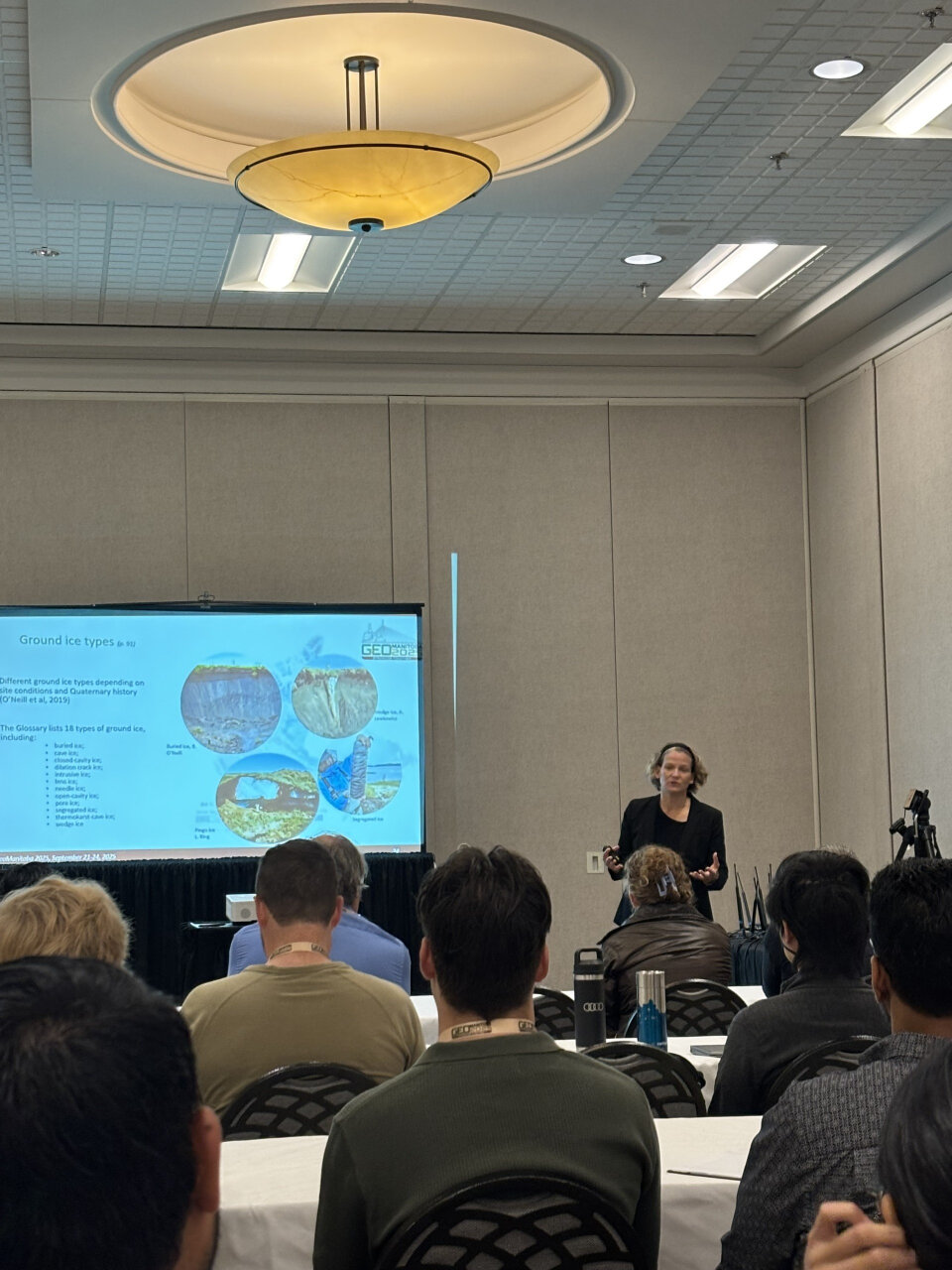
Pascale Roy-Léveillée presenting at the short course. Photo by Tabatha Rahman.
The course discussed challenges related to site investigation, design, construction, and maintenance of infrastructure in permafrost terrain. It also provided a basic understanding of permafrost environments and dynamics, including a review of ground thermal regime, ground ice and land features related to permafrost, and the mechanical properties of thawed and frozen soils.
Session chairs Guy and Pascale also presented resources (including guidelines and standards), discussed how engineers and geomorphologists can collaborate to ensure that construction in permafrost terrain is efficient and resilient, and presented strategies and principles for planning, design, and management of infrastructure in sensitive periglacial environments.
Coffee Break & Trade Show
The CPA booth at GeoManitoba had plenty of exciting swag items produced by the CPA Standing Dissemination Committee, including the 2025 CPA Frosty Photos calendar, stickers, postcards, and permafrost posters created by Brendan O’Neill (NRCan).
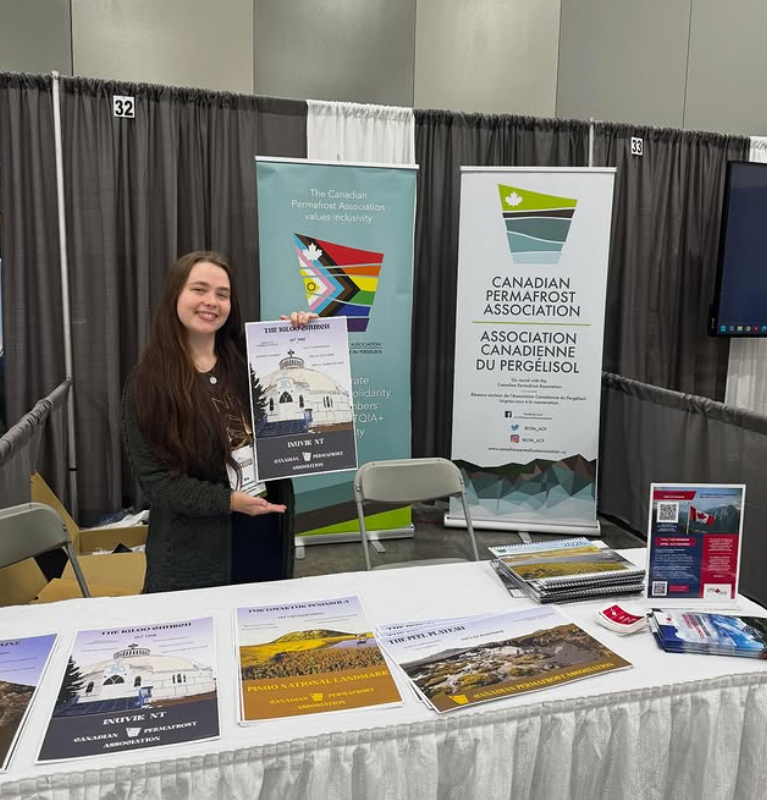
Ria Nicholson at the CPA Booth, with art posters by Brendan O'Neill.
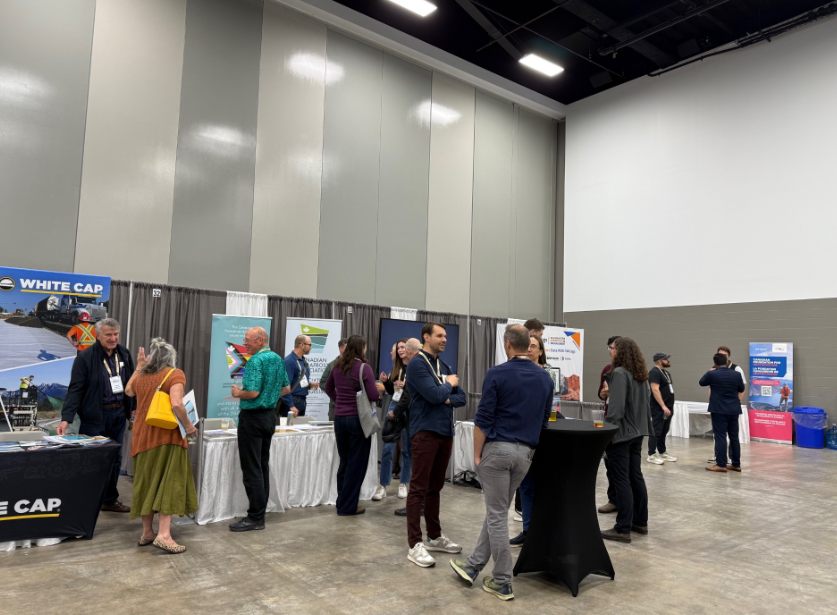
Socializing around the CPA booth.
CGS Awards Banquet
On Monday evening, conference attendees gathered to celebrate the accomplishments of their colleagues. The CPA presented the Don W. Hayley Award to Dr. David Sego (University of Alberta), the MacKay Lecture award to Dr. Duane Froese (University of Alberta), and the Hugh French Award to Dr. Chris Burn (Carleton University).
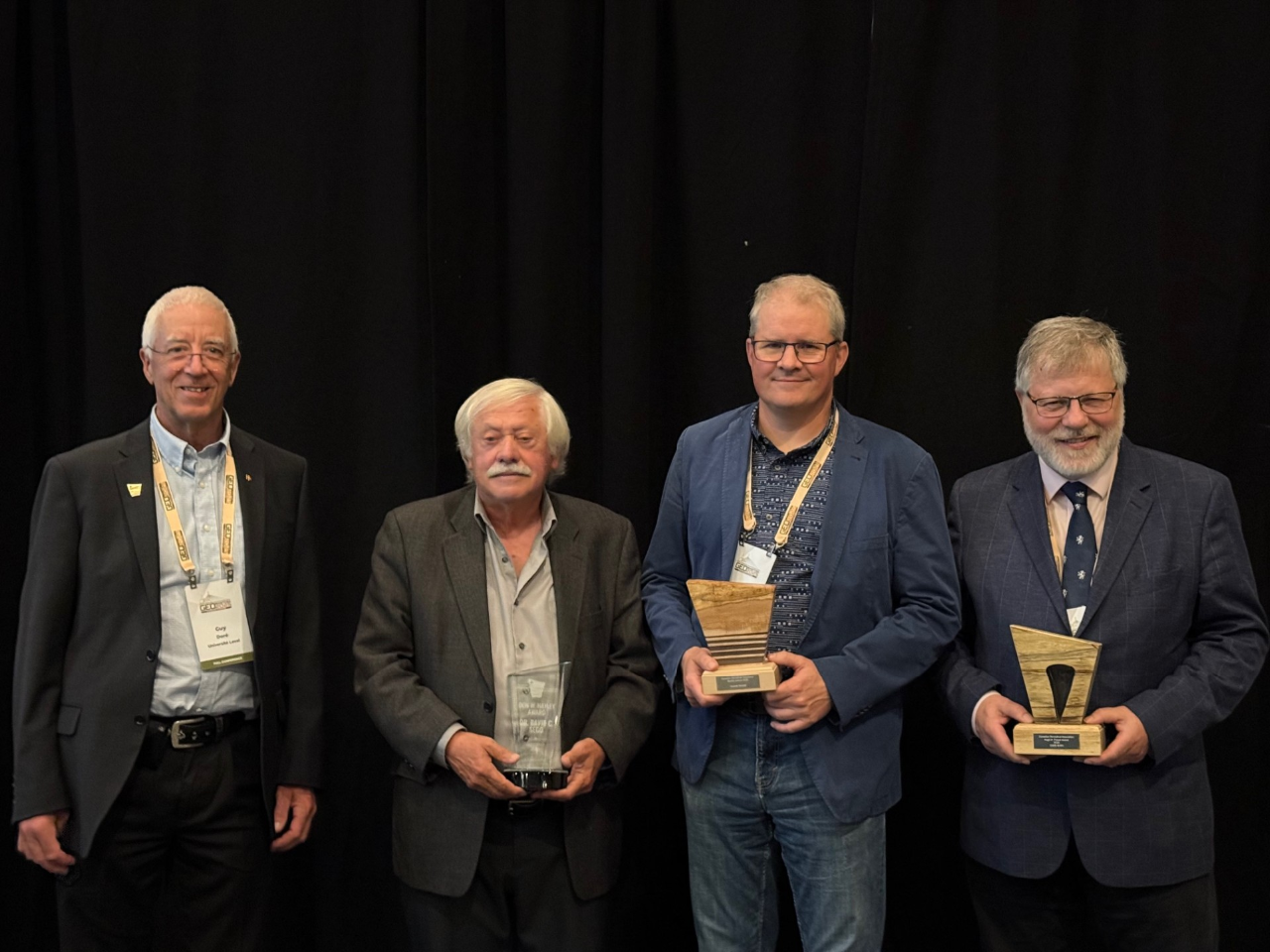
Pictured, left to right: CPA President Guy Doré, Dave Sego, Duane Froese, Chris Burn
Jocelyn Hayley, incoming President of the CPA as of 2025, also received the G. Geoffrey Meyerhof Award, presented by the Soil Mechanics & Foundation Division of the Canadian Geotechnical Society, for outstanding contributions to soil mechanics and foundation engineering.
The CPA also presented awards to students and researchers for posters, presentations, and papers.
Best Student CPA Poster: “Higher Surface Temperatures and More Frequent Rainfall Events in High Arctic Wet Sedge Dominated Watersheds May Lead to Increased Net CO2 Emissions” by Cedelle Pereira
Best Student CPA Presentation: “Inventory and Assessment of Drilling-Waste Sumps in the Discontinuous Permafrost Zone of the Sahtú Region, NWT” by Michelle Landry
Best CPA Paper with Student Leader Author: “Permafrost and geocryological hazard assessment research trends in Nunatsiavut, northeastern Canada” by Madison Power, Robert Way, Yifeng Wang, Antoni Lewkowicz.
Best CPA Paper:
and
“Technical basis for Revisions to Alberta’s Guide for Working Safely on Ice Covers” by Sam Proskin and Ala Salman
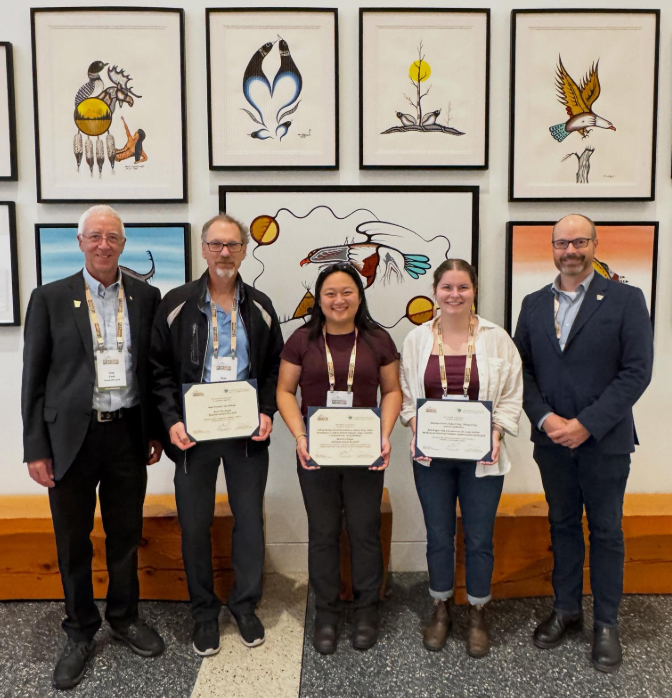
Pictured: Guy Doré, Sam Proskin, Yifeng Wang, Madison Power, Peter Morse
Tuesday September 23rd
CPA Luncheon
The CPA Luncheon took place on Tuesday and included a game of Permafrost Trivia, hosted and organised by the Standing Dissemination Committee.
The luncheon also served as the official launch of the Glossary of Permafrost Science and Engineering, created by the CPA’s Permafrost Terminology Action Group. The Glossary is the result of 55 meetings over the course of 4.5 years and represents a comprehensive revision of the earlier Glossary of Permafrost and Related Ground-Ice Terms. Printed copies of the Glossary were awarded as prizes for winners of the trivia game.
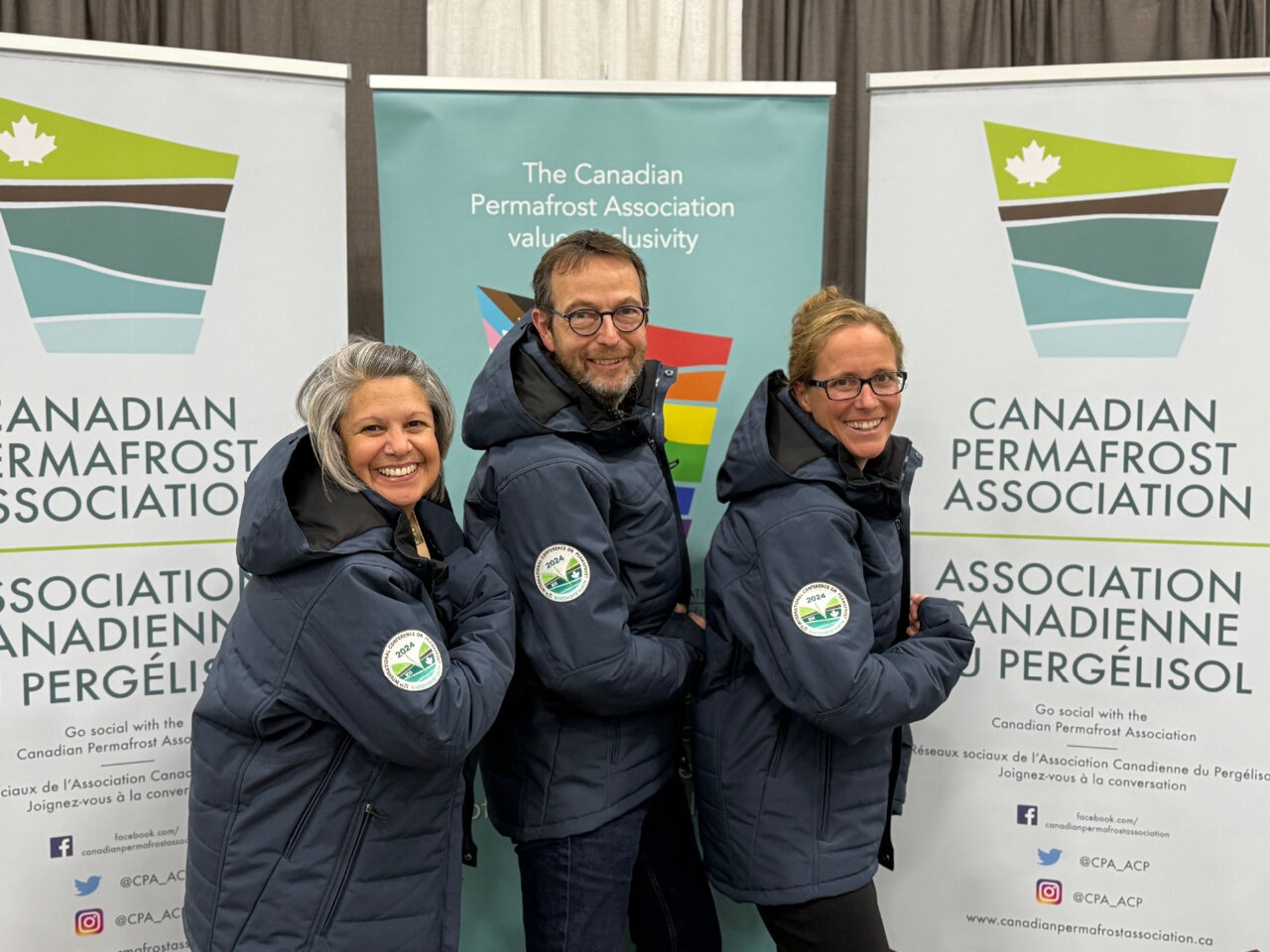
The CPA also presented commemorative jackets to Kumari Karunaratne (left), Lukas Arenson (middle), Riley Beddoe (right), and Barb Fortin (not present) at the luncheon to thank them for their hard work organizing the 12th International Conference on Permafrost held in Whitehorse in 2024.
CPA Special Session
The special session highlighted the work of the CPA’s five Action Groups, which are volunteer-driven initiatives that undertake projects to advance permafrost science and engineering across Canada. The following summarizes each action group’s objectives and recent progress updates shared at the special session.
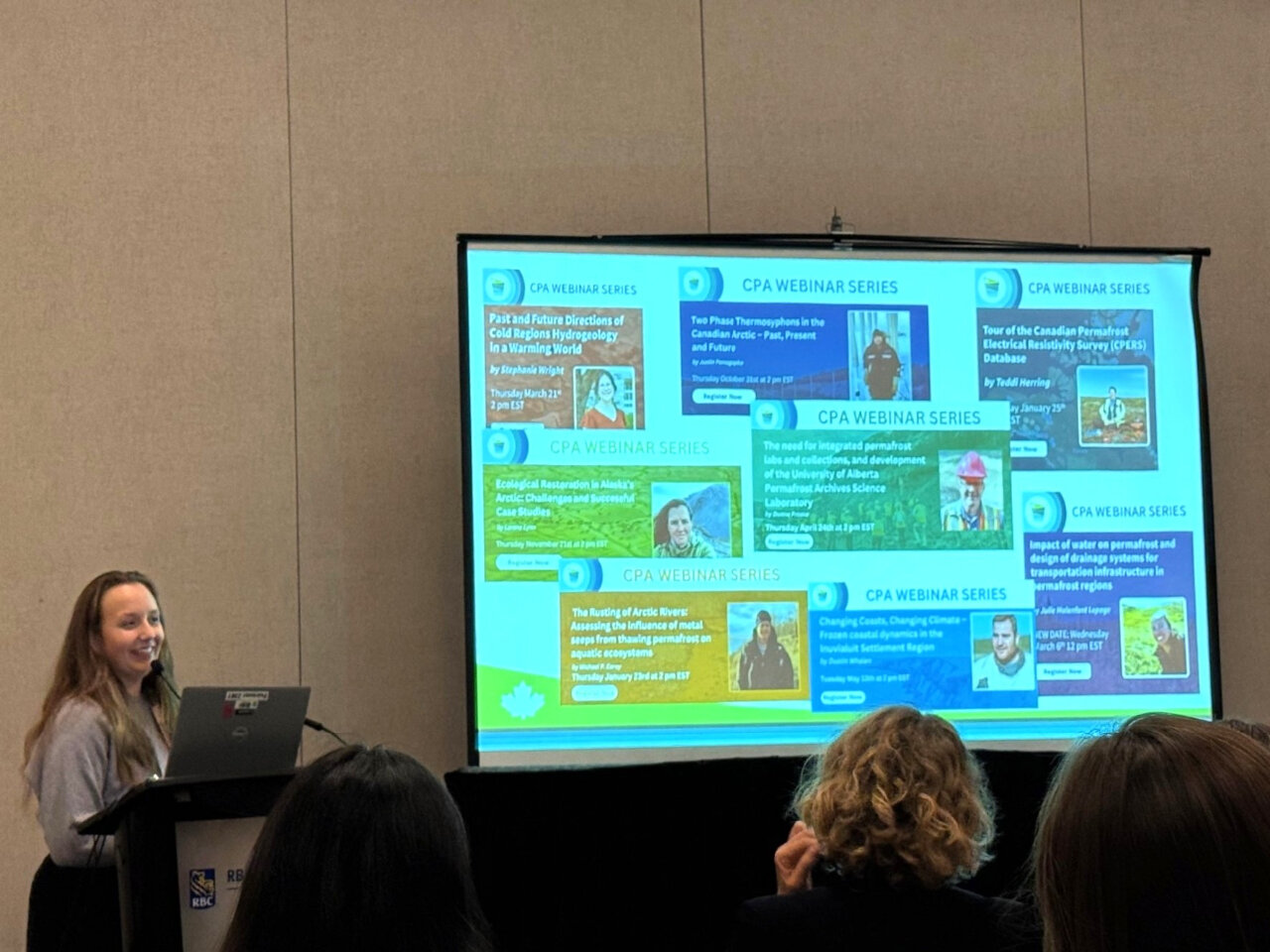
Pictured: Robyn Starycki presents an update on CPA webinars.
The Thermal Modelling Action Group was founded to bring together the expertise of CPA member engineers, scientists, and researchers to advance thermal modelling capabilities among students and early career professionals working in cold regions and permafrost environments. Its central objective is to develop a “best practices” document for thermal modelling of permafrost targeted towards students, early career researchers/professionals, and others with limited exposure to the subject. Several chapters have been completed to date.
The Permafrost Engineering Resources Action Group focuses on identifying, organizing, and increasing the accessibility of key information sources relevant to support engineering activities in permafrost regions. The group is developing a web-based database of curated engineering resources, each A classified with brief descriptions and applicability to the Canadian context. It is currently in the web development phase.
The Tundra Trails Action Group aims to prepare plain-language guidelines for planning, design, construction, monitoring and maintenance of trails (e.g., ATV) in tundra environments underlain by permafrost. The aim is to ensure practices limit permafrost degradation and accommodate landscape responses to climate change. Since its inception early in 2025, the group has met on several occasions to discuss key challenges associated with tundra trails and gather information (e.g., site photographs, associated anecdotes, reports/publications) to support the development of associated guidelines. A framework for the guideline document has been drafted.
The Permafrost Education Action Group was established to develop a permanent permafrost training program that supports both scientific and engineering capacity building among CPA members and partner organizations across Canadian permafrost communities and beyond. The action group presented a newly developed survey which will be targeted to assess needs and
guide the program's structure. The survey results are intended to inform how this training program could best serve the needs of the permafrost community.
Wednesday, September 24th
Plenary Session: MacKay Lecture
The JR MacKay Lecture was delivered by Dr. Duane Froese (University of Alberta), titled: “Mapping discontinuous and continuous permafrost at regional scales using airborne electromagnetic (AEM) data from the central Mackenzie Valley and Inuvik-Tuktoyaktuk corridors.”
CPA Panels
The CPA also hosted two panels at GeoManitoba, organized by Ryley Beddoe.
The first CPA panel, sponsored by the Cold Regions Divison of the Canadian Geotechnical Society, was titled titled “Planning Today for the Permafrost of Tomorrow”. It was chaired by Dr. Chris Burn (University of Carleton) and featured senior professionals Ed Hoeve (HoevEng), Heather Brookes (BGC Engineering), Brett Young (Arctic Gateway) and CPA President Guy Doré (Université Laval).
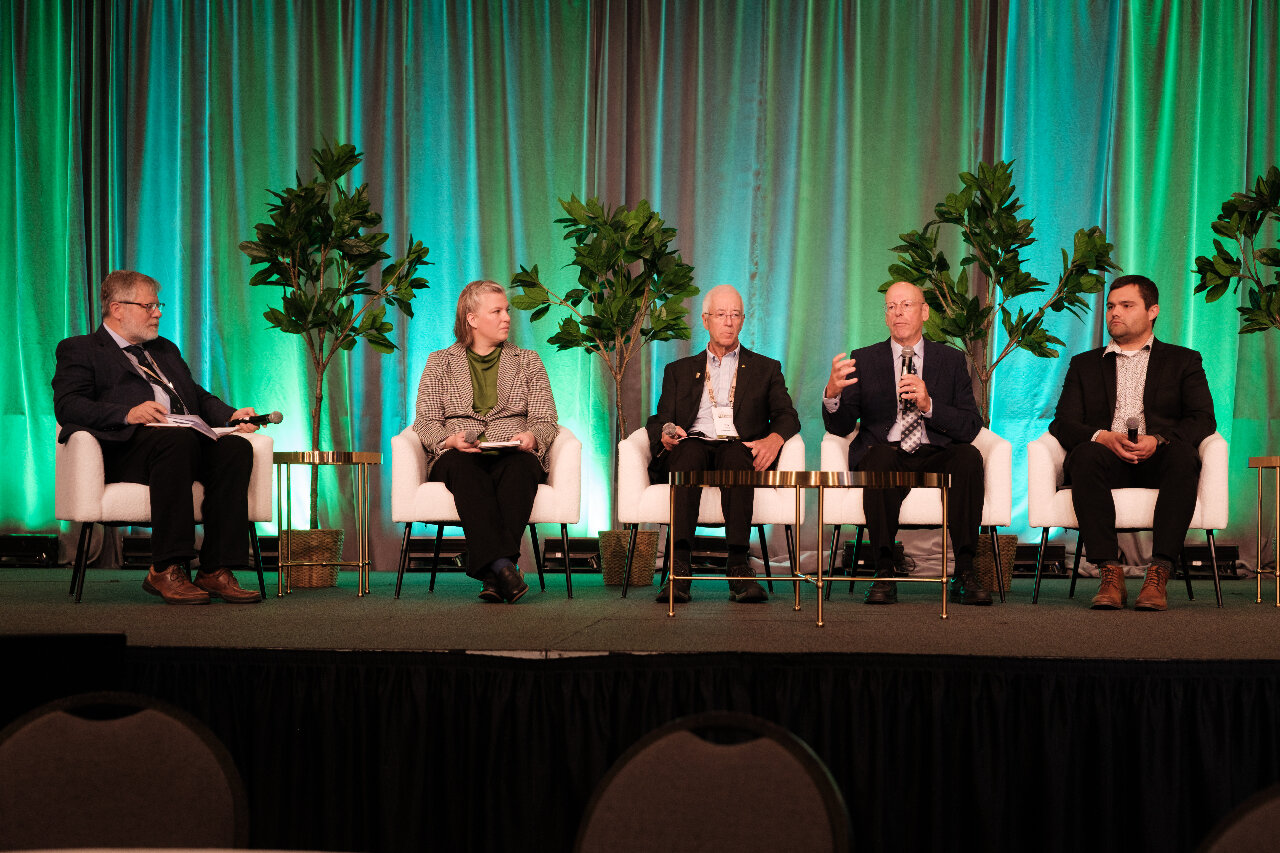
Left to right: Chris Burn, Heather Brookes, Guy Doré, Ed Hoeve, Brett Young
The second panel, titled “Experiences in Adapting to Permafrost Change” was chaired by Kumari Karunaratne (NTGS) and featured Early Career Researchers/Professionals: Alice Wilson (NTGS), Yifeng Wang (GSC), and Simon Dumais (Université Laval), and CPA Communications Director Astrid Schetselaar (RMC).
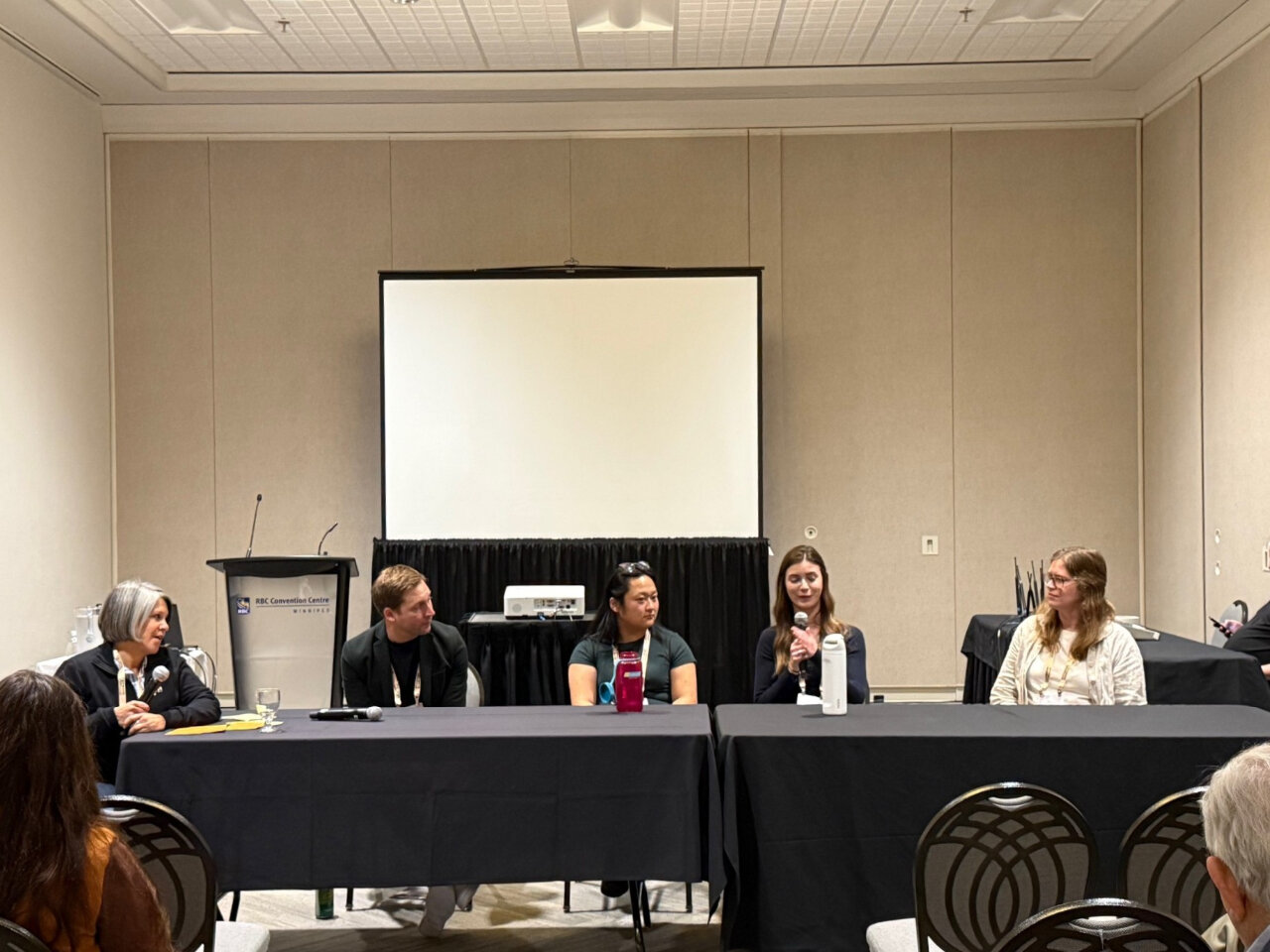
Left to right: Kumari Karunaratne (NTGS), Simon Dumais (Université Laval), Yifeng Wang (GSC), Astrid Schetselaar (RMC), and Alice Wilson (NTGS).
The theme of GeoManitoba was “Stronger Together”, reflecting the ever-increasing need for collaboration in permafrost science and engineering. The CPA sincerely thanks the Cold Regions Division of the Canadian Geotechnical Society, as well as all the volunteers and organizers of GeoManitoba2025, for collaborating with us on this incredible event.




 JOIN NOW